WHO validates elimination of trachoma as a public health problem in Libya
WHO validates elimination of trachoma as a public health problem in Libya
Skip to main content
National Committee for the Prevention of blindness, Ministry of health Libya
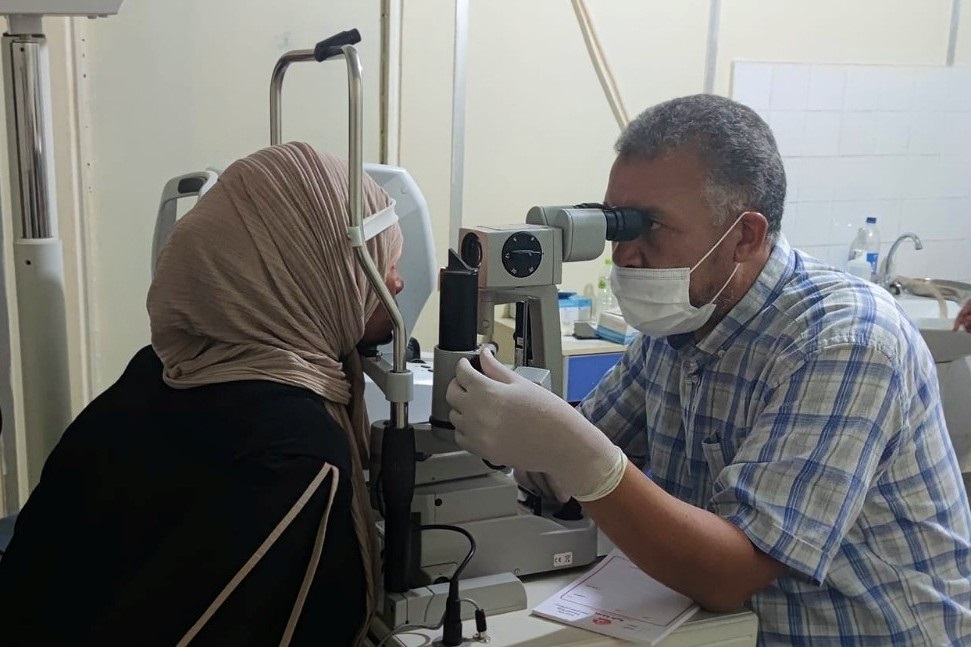
A health-care worker conducts an eye examination.
WHO validates elimination of trachoma as a public health problem in Libya
18 February 2026
Cairo / Tripoli / Geneva
The World Health Organization (WHO) today announced that Libya has eliminated trachoma as a public health problem, a landmark victory for public health in WHO’s Eastern Mediterranean Region. This hard-won achievement protects future generations from preventable blindness and provides a powerful reminder that countries can overcome neglected tropical diseases despite persisting challenges.
“This milestone reflects Libya’s determination to safeguard the health of its people and reinforces our conviction that progress against neglected tropical diseases is possible everywhere,” said Dr Tedros Adhanom Ghebreyesus, WHO Director-General. “Eliminating trachoma as a public health problem is an inspiring achievement for the Eastern Mediterranean Region and for communities across Libya.”
With this validation, Libya becomes the 28th country worldwide and the 8th in the Eastern Mediterranean Region to eliminate trachoma. The achievement demonstrates how evidence-based programming and coordinated technical support can overcome neglected tropical diseases, even amongst complex humanitarian and migration dynamics.
“Libya joins a growing group of countries from the Eastern Mediterranean Region that have eliminated trachoma,” said Dr Hanan Balkhy, WHO Regional Director for the Eastern Mediterranean. “This result reflects strong regional coordination and Libya’s perseverance during periods of great challenge.”
A historic disease defeatedTrachoma has been documented in Libya for over a century, with surveys in the 20th century reporting high levels of active (inflammatory) trachoma in communities across the country, but particularly in the south. After early efforts by the Ministry of Health to control infectious eye disease in the 1970s and 1980s, and subsequent health system strengthening, surveys indicated that transmission had fallen dramatically.
In 2017, the Ministry of Health prioritized trachoma elimination as part of national eye health work within the National Prevention of Blindness Programme. With support from WHO, Sightsavers, International Trachoma Initiative and Tropical Data, new surveys were conducted in 2022 across six southern districts where trachoma was suspected to persist. These surveys found active trachoma and trichiasis (a condition associated with trachoma) prevalences below WHO elimination thresholds, except for trichiasis in Wadi Al Hayaa/Ghat, where a trichiasis surgery campaign subsequently took place. In 2025, a further survey confirmed that the prevalence of trichiasis had fallen below WHO’s elimination threshold.
Progress despite adversityLibya’s achievement is particularly notable given years of political instability and humanitarian challenges that strained health services, displaced populations and increased demand for basic services, including water, sanitation and hygiene. Despite these pressures, the national trachoma elimination programme successfully integrated surveillance, expanded access to surgical care, built capacity among
eye health workers and partnered with national and international stakeholders.
“This validation is a source of pride for Libya and a testament to the commitment of our health workers and communities,” said Dr Mohamed Al-Ghoj, Acting Minister of Health. “Even through difficult years, we maintained our focus on improving eye health services and ensuring no one was left behind. This success would not have been possible without the professionalism and dedication of our doctors, nurses and health workers in the field who reached all and every district to ensure a future free of preventable blindness.”
Throughout the years, the WHO Country Office in Libya provided extensive technical and operational support to prevent, detect and control diseases and ensure the best attainable health and well-being in the country. “Reaching trachoma elimination status
📰 This is a summary. Read the full article at the source:
Read full article →Read in another language
she.news may earn commission from links on this page.
Related Articles

Recommendations for influenza vaccine composition for the 2026-2027 northern hemisphere season
WHO News