Trump Says His Goal Is to Stop Iran Getting a Nuclear Bomb. But the Result Might Be Lots More Nukes Across the Globe
How War With Iran Could Lead to More Nuclear Weapons Around the WorldWorldNuclear WeaponsTrump Says His Goal Is to Stop Iran Getting a Nuclear Bomb. But the Result Might Be Lots More Nukes Across the GlobeADD TIME ON GOOGLEShow me more content from TIME on Google Search
by Charlie CampbellEditor at Large
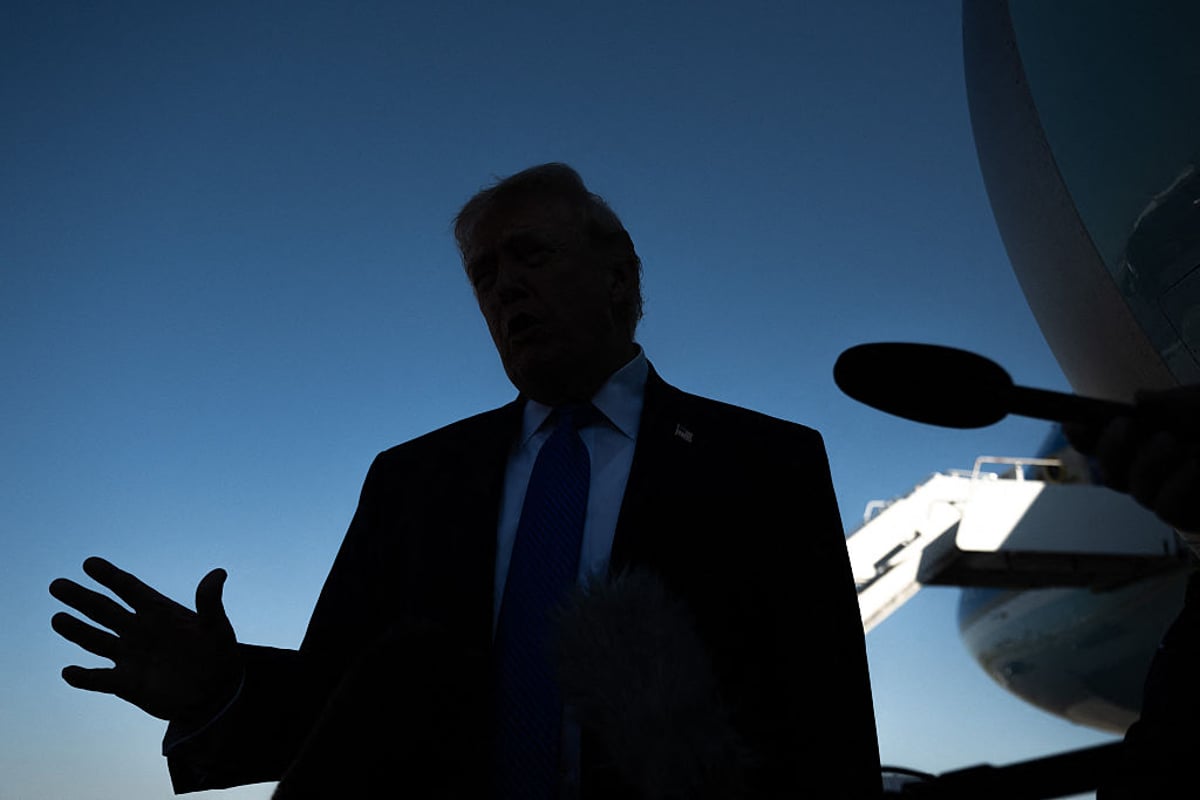
Mar 28, 2026 6:52 PM CUTPresident Donald Trump speaks to reporters about U.S.-Iran negotiations, which he said must result in Tehran giving up its nuclear ambitions, before boarding Air Force One at Palm Beach International Airport on March 23, 2026.
President Donald Trump speaks to reporters about U.S.-Iran negotiations, which he said must result in Tehran giving up its nuclear ambitions, before boarding Air Force One at Palm Beach International Airport on March 23, 2026.Saul Loeb—AFP/Getty Imagesby Charlie CampbellEditor at Large
Mar 28, 2026 6:52 PM CUTOf all the reasons proffered for the Iran war—and there’ve been a few—probably the easiest for Americans to get behind is that striking the regime was necessary to permanently derail its nuclear weapons program.
After all, the International Atomic Energy Agency (IAEA) last May revealed Iran had stockpiled 408.6 kg of 60%-enriched uranium, which with further refinement could potentially fuel nine warheads. The nation’s inventory of some 2,500 ballistic missiles—the largest in the Gulf—and support for terrorist proxies across the region added to the security migraine. Iran “can’t have nuclear weapons,” President Donald Trump said in February. “It’s very simple. You can’t have peace in the Middle East if they have a nuclear weapon.”
But while the strikes against Iran’s nuclear sites and scientists will no doubt slow Iran’s atomic ambitions in the near-term, analysts say the regime—providing it survives, which all signs suggest it will—will now be even more set on acquiring a nuclear weapon.
“For Iran, nuclear weapons are now the only thing that will guarantee regime survival,” says Ramesh Thakur, professor emeritus and director of the Centre for Nuclear Non-Proliferation and Disarmament in the Crawford School of the Australian National University, who previously negotiated with Iran on behalf of the U.N. “So why wouldn’t they get them?”
Indeed, given Iran’s ballistic missile infrastructure has been badly degraded by U.S. and Israeli attacks, a nuclear bomb may prove “a faster route to restore deterrence for a regime that is now more radical and has been attacked twice in the midst of negotiations,” says Jennifer Kavanagh, director of military analysis for the Washington-based think tank Defense Priorities.
But it’s not just Iranian nuclear weapons that the U.S. and world must worry about going forward. On Tuesday, North Korean Supreme Leader Kim Jong Un left little doubt he was referencing Iran when he said the “present situation clearly proves” his country was correct to hang onto its nuclear arsenal, which he termed “irreversible,” while accusing Washington of “state sponsored terrorism and aggression.”
Of course, for rogue states the writing was already on the wall given the fates of Libyan leader Muammar Gaddafi and Iraq’s Saddam Hussein, both toppled after abandoning their nuclear programs. (Ukraine no doubt also rues voluntarily giving up its nukes following the breakup of the Soviet Union.) That message was underscored by Trump pulling out of the Iran nuclear deal, officially the Joint Comprehensive Plan of Action (JCPOA), in 2018, spotlighting the futility of striking a bargain with a capricious U.S. where any administration can rip up the pacts of its predecessor.
The difference the Iran War really makes is the galvanizing effect it has on U.S. allies and neutral states pondering their own nuclear deterrent. Already, Europe was reeling from Trump’s humiliating broadsides, threats to seize Greenland, and trashing of NATO, prompting discussions toward a new protective alliance chiefly against Russia. Whether this involves French and British nukes stationed in the east of the bloc, or other members such as Germany or Poland developing their own weapons, is unclear, though the trajectory is irrefutable—not least since Vladimir Putin already claims to have moved nuclear-capable missile systems into neighboring Belarus.
Then there are U.S. allies in the Middle East, who have received a stunning wake-up call regarding the impotence of American security guarantees following Iranian reprisals. Instead of safeguarding host populations and infrastructure, Washington’s overriding focus has been on protecting its military bases all while—along with regional nemesis Israel—plunging the Gulf’s people and economies into crisis. If Iran survives the current onslaught, expect its nuclear ambitions emboldened, prompting Saudi Arabia, Turkey, and possibly Egypt to explore their own deterrents, says Thakur.
Moving east, India and Pakistan are already nuclear powers, and after recent border skirmishes, neither
📰 This is a summary. Read the full article at the source:
Read full article →Read in another language
she.news may earn commission from links on this page.
Related Articles

French court hands Islam scholar Tariq Ramadan 18-year jail term for rape
BBC News
11-Year-Old's Heartfelt Messages Transform into Art Mural in English City
Asharq Al-AwsatBerlin Eases Arms Export Restrictions to Gulf Countries in Sign of Solidarity
DW Arabic